Bank of America Tower
充电宝的英文名是Power Bank #生活常识# #充电宝#
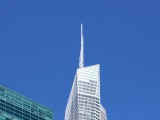
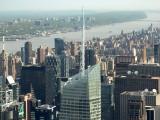
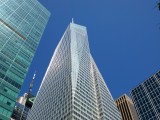
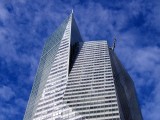
You must be a CVU Member to view this resource.
MetricsHeight
1
To Tip:Height is measured from the level of the lowest, significant, open-air, pedestrian entrance to the highest point of the building, irrespective of material or function of the highest element (i.e., including antennae, flagpoles, signage and other functional-technical equipment).
365.8 m / 1,200 ft
2
Architectural:Height is measured from the level of the lowest, significant, open-air, pedestrian entrance to the architectural top of the building, including spires, but not including antennae, signage, flag poles or other functional-technical equipment. This measurement is the most widely utilized and is employed to define the Council on Vertical Urbanism (CVU) rankings of the "World's Tallest Buildings."
365.8 m / 1,200 ft
3
Occupied:Height is measured from the level of the lowest, significant, open-air, pedestrian entrance to the highest occupied floor within the building.
234.5 m / 769 ft
Floors
Above GroundThe number of floors above ground should include the ground floor level and be the number of main floors above ground, including any significant mezzanine floors and major mechanical plant floors. Mechanical mezzanines should not be included if they have a significantly smaller floor area than the major floors below. Similarly, mechanical penthouses or plant rooms protruding above the general roof area should not be counted. Note: CVU floor counts may differ from published accounts, as it is common in some regions of the world for certain floor levels not to be included (e.g., the level 4, 14, 24, etc. in Hong Kong).
55
Below GroundThe number of floors below ground should include all major floors located below the ground floor level.
3
1 2 3 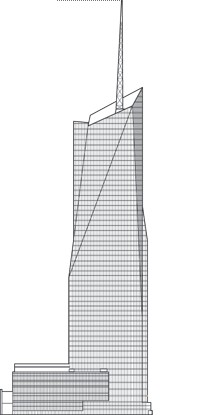
Height 365.8 m / 1,200 ft
Floors 55
Official NameThe current legal building name.
Bank of America Tower
Other NamesOther names the building has commonly been known as, including former names, common informal names, local names, etc.
One Bryant Park
TypeCVU collects data on two major types of tall structures: 'Buildings' and 'Telecommunications / Observation Towers.' A 'Building' is a structure where at least 50% of the height is occupied by usable floor area. A 'Telecommunications / Observation Tower' is a structure where less than 50% of the structure's height is occupied by usable floor area. Only 'Buildings' are eligible for the CVU 'Tallest Buildings' lists.
Building
StatusCompleted
Architecturally Topped Out
Structurally Topped Out
Under Construction
Proposed
On Hold
Never Completed
Vision
Competition Entry
Canceled
Proposed Renovation
Under Renovation
Renovated
Under Demolition
Demolished
Completed
Completion
2009
CountryCVU follows the United Nations's definition of Country, and thus uses the lists and codes established by that organization.
United States
FunctionA single-function tall building is defined as one where 85% or more of its usable floor area is dedicated to a single usage. Thus a building with 90% office floor area would be said to be an "office" building, irrespective of other minor functions it may also contain.
A mixed-use tall building contains two or more functions (or uses), where each of the functions occupy a significant proportion of the tower's total space. Support areas such as car parks and mechanical plant space do not constitute mixed-use functions. Functions are denoted on CVU "Tallest Building" lists in descending order, e.g., "hotel/office" indicates hotel function above office function.
Office
Structural MaterialAll-Steel
Both the main vertical/lateral structural elements and the floor spanning systems are constructed from steel. Note that a building of steel construction with a floor system of concrete planks or concrete slab on top of steel beams is still considered an “all-steel” structure as the concrete elements are not acting as the primary structure.
All-Concrete
Both the main vertical/lateral structural elements and the floor spanning systems are constructed from concrete which has been cast in place and utilizes steel reinforcement bars and/or steel reinforced concrete which has been precast as individual components and assembled together on-site.
All-Timber
Both the main vertical/lateral structural elements and the floor spanning systems are constructed from timber. An all-timber structure may include the use of localized non-timber connections between timber elements. Note that a building of timber construction with a floor system of concrete planks or concrete slab on top of timber beams is still considered an “all-timber” structure as the concrete elements are not acting as the primary structure.
Mixed-Structure
Utilizes distinct systems (e.g. all-steel, all-concrete, all-timber), one on top of the other. For example, a Steel Over Concrete indicates an all-steel structural system located on top of an all-concrete structural system, with the opposite true of Concrete Over Steel.
Composite
A combination of materials (e.g. steel, concrete, timber) are used together in the main structural elements. Examples include buildings which utilize: steel columns with a floor system of reinforced concrete beams; a steel frame system with a concrete core; concrete-encased steel columns; concrete-filled steel tubes; etc. Where known, the CVU database breaks out the materials used within a composite building’s primary structural elements.
Concrete-Steel Composite
Energy Label
LEED Platinum
Height
Architectural
Height is measured from the level of the lowest, significant, open-air, pedestrian entrance to the architectural top of the building, including spires, but not including antennae, signage, flag poles or other functional-technical equipment. This measurement is the most widely utilized and is employed to define the Council on Vertical Urbanism (CVU) rankings of the "World's Tallest Buildings."
365.8 m / 1,200 ft
To Tip
Height is measured from the level of the lowest, significant, open-air, pedestrian entrance to the highest point of the building, irrespective of material or function of the highest element (i.e., including antennae, flagpoles, signage and other functional-technical equipment).
365.8 m / 1,200 ft
Occupied
Height is measured from the level of the lowest, significant, open-air, pedestrian entrance to the highest occupied floor within the building.
234.5 m / 769 ft
Floors Above GroundThe number of floors above ground should include the ground floor level and be the number of main floors above ground, including any significant mezzanine floors and major mechanical plant floors. Mechanical mezzanines should not be included if they have a significantly smaller floor area than the major floors below. Similarly, mechanical penthouses or plant rooms protruding above the general roof area should not be counted. Note: CVU floor counts may differ from published accounts, as it is common in some regions of the world for certain floor levels not to be included (e.g., the level 4, 14, 24, etc. in Hong Kong).
55
Floors Below GroundThe number of floors below ground should include all major floors located below the ground floor level.
3
# of ElevatorsNumber of Elevators refers to the total number of elevator cars (not shafts) contained within a particular building (including public, private and freight elevators).
52
Top Elevator SpeedTop Elevator Speed refers to the top speed capable of being achieved by an elevator within a particular building, measured in meters per second.
8.1 m/s
Tower GFATower GFA refers to the total gross floor area within the tower footprint, not including adjoining podiums, connected buildings or other towers within the development.
195,095 m² / 2,099,985 ft²
Rankings
By Location
You must be a CVU Member to view this resource.
By functionYou must be a CVU Member to view this resource.
By material#
72
Tallest in the World
#
11
Tallest in North America
#
11
Tallest in United States
#
9
Tallest in New York City
Construction Schedule
2003
Proposed
2004
Construction Start
2009
Completed
CVU Awards & Distinctions
Best Tall Building, by Region, Americas 2010 Winner2010 CVU Awards
About Bank of America Tower
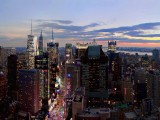
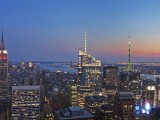
The Bank of America Tower at One Bryant Park was designed to set a new standard in high-performance buildings, for both the office workers who occupy the tower and for a city and country that are awakening to the modern imperative of sustainability. Drawing on concepts of biophilia—or humans’ innate need for connection to the natural environment—the vision at the occupant scale was to create the highest quality modern workplace by emphasizing daylight, fresh air, and an intrinsic connection to the outdoors. At the urban scale, the tower addresses its local environment as well as the context of midtown Manhattan, to which it adds an expressive new silhouette on an already-iconic skyline.
The building responds to the dense urban context by weaving into the existing grid at street level, yet challenging the boundaries of public and private space with a highly transparent corner entry. As it rises, the tower shears into two offset halves, increasing the verticality of its proportions as well as the surface area exposed to daylight. Mass is sliced from these two rectilinear volumes, producing angular facets that open up light and oblique views beyond the typical limits of urban geometry. The crystalline form—inspired by the legacy of the 1853 Crystal Palace, which once stood adjacent in Bryant Park, and by a quartz crystal from the client’s collection—suggests an appropriate natural analogue, both organic and urban in nature. With its crisp, folded façade, the tower changes with the sun and sky; its southeast exposure, a deep double wall, orients the building in its full height toward Bryant Park, its namesake and the most intensively-used open space in the US.
With the Bank of America as its primary tenant, occupying six trading floors and 75% of its interior, the tower signals a significant shift in corporate America and in the real estate industry, acknowledging the higher value of healthy, productive workplaces. One Bryant Park’s most lasting achievement is to merge the ethics of the green building movement with a twenty-first century aesthetic of transparency and re-connection.
Bank of America Tower is the first commercial high-rise to earn LEED Platinum certification from the US Green Building Council. The building’s advanced technologies include a clean-burning, on-site, 5.0 MW cogeneration plant, which provides approximately 65% of the building’s annual electricity requirements and lowers daytime peak demand by 30%. A thermal storage system further helps reduce peak load on the city’s over-taxed electrical grid by producing ice at night, melted during the day to provide cooling. Nearly all of the 1.2m (4ft) of annual rain and snow that fall on the site is captured and re-used as gray water to flush toilets and supply the cooling towers. These strategies, along with waterless urinals and low-flow fixtures, save approximately 7.7 million gallons of potable water per year.
Recycling was a prominent factor throughout the building’s construction, with 91% of construction and demolition waste diverted from landfill. Materials include steel made from 75% (minimum) recycled content and concrete made from cement containing 45% recycled content (blast furnace slag). To protect indoor air quality as well as natural resources, interior materials are low-VOC, sustainably harvested, manufactured locally, and/or recycled wherever possible.
The building’s exceptionally high indoor environmental quality results from hospital-grade, 95% filtered air; abundant natural daylight and 2.9m (9.5ft) ceilings; an under-floor ventilation system with individually-controlled floor diffusers; round-the-clock air quality monitoring; and views through a clear, floor-to-ceiling glass curtain wall. This high-performance curtain wall minimizes solar heat gain through low-E glass and heat-reflecting ceramic frit; it also has allowed the Bank of America Tower to reduce artificial lighting with an automated daylight dimming system, reducing lighting and cooling energy by up to 10%.
On an urban level, the project also represents the culmination of the developer’s multigenerational efforts to revitalize the Times Square area, and gives back to the city with a street-level Urban Garden Room, a mid-block pedestrian passage/performance space, and the first “green” Broadway theater, the LEED Gold Stephen Sondheim Theater.
In an era of heightened security, a central challenge of the project was balancing the complexities of program and scale with high-performance architecture and urban design. In its layered connection to the ground plane, Bank of America Tower resolves this question with a progression of public and private spaces—from Bryant Park to the Urban Garden Room to the semi-public lobby. As a total response to the urban environment, the building’s restorative connections therefore work on many levels, from green roofs and views of the park to more subtle and expressive elements. A highly integrated approach to architecture and engineering ensured a close relationship between form and function. Bridging contexts as vastly different as Times Square and Bryant Park, the project makes a highly visible statement on urban stewardship and global citizenship for the 21st century.
CVU Awards & Distinctions
Best Tall Building, by Region, Americas 2010 Winner2010 CVU Awards
网址:Bank of America Tower https://c.klqsh.com/news/view/350297
相关内容
Bank of America in Chicago with WalkBank of America Sales Office with Virtual Banking & Separate ATM
The birth of the Eiffel Tower
Explore the top of the Eiffel Tower
Eiffel Tower key stats : the Tower in numbers
Access: getting to the Eiffel Tower
Norges Bank
How to get to the Eiffel Tower
15 essential things to know about the Eiffel Tower
Directions: How to Get to the Eiffel Tower
随便看看
最新乐趣
- 孟子义李昀锐手势合拍
- 白敬亭又一年十月走着
- 肖战演唱会幕后纪实,饭拍视频都只顾着怼脸了,这样看舞台真的好酷炫啊
- 曾宝仪金钟奖获最佳生活类节目主持人奖
- 孟子义说太瘦了没撑起唐装
- 想造哀家的反,你还差了点 美人心计 戴春荣
- 窦漪房大女主人生连吕雉薄姬都羡慕
- 王凯分享养心秘诀 自曝进组拍戏持续自我施压
- 小弟出卖蒋天,想借此投靠高启强,高启强:我可不敢收!
- 曲尽陈情千万不要是南京限定
热点乐趣
- 89801
- 78136
- 64282
- 60375
- 39851
- 35902
- 32635
- 23005
- 22795
- 21611